the peace she fought for: lo's story
There are some kinds of peace you stumble into.
And then there is the kind you have to fight for.
For Lo, safety isn't an abstract feeling anymore. It isn't simply locking the door at night or knowing where you're going to sleep.
Safety is coming home without being afraid of what might be waiting inside.
It's walking into the garage without constantly looking over her shoulder.
It's money in her own bank account.
It's making decisions about her own body.
It's choosing the paint colors in the home that she owns.
It's watching her three children laugh, grow, and thrive.
It's looking toward the future and, finally, not being afraid of it.
At 31 years old, Lo describes herself as feeling like a "100-year-old 31-year-old."
She's lived through enough fear, grief, rebuilding, and change to understand exactly how previous an ordinary, peaceful life can be.
And now?
She's building one.
Lo doesn't often share the specific details of the abuse she survived.
Some of them, she says, are simply too disturbing.
What began as a relationship with seemingly small moments of entitlement and pressure changed over the course of her marriage. Slowly, those moments grew.
Her agency disappeared.
Her voice stopped being respected.
Her body stopped being respected.
Without her own income and with family living far away, Lo became increasingly isolated. She felt small. Insignificant. Terrified.
And while she is incredibly grateful that her children were shielded from so much of what happened, they still experienced life with a mother trying to survive an abusive relationship.
They saw the depression.
They saw the days she couldn't get out of bed.
Sometimes the toll on her body became so severe that she couldn't even walk.
Today, some of Lo's deepest grief comes from what all of this has meant for her children.
She carries guilt over the red flags she didn't recognize when she was younger. She grieves that her children are growing up without their father present in their daily lives.
But she also knows something now that she couldn't fully understand when she was trapped inside it:
Staying would not have given her children an unbroken home.
It would have kept them inside an unsafe one.
Today, her children have something different.
They have peace.
They have safety.
And they have a mother whose love has remained constance through all of it.
There wasn't one cinematic moment when everything suddenly became clear.
There was no single lightbulb.
Instead, there was a woman lying in bed, grieving and terrified, slowly beginning to hear something inside herself:
This cannot be our lives. There has to be more.
Lo describes her Higher Power as quietly calling her back toward the light—and, in her own words, telling her to "GET THE HELL OUT."
So she began putting together a plan.
Not everything at once.
The next few weeks.
Then the next few months.
Eventually, the next few years.
Therapy became instrumental in helping Lo understand what was happening to her.
For years, she had minimized things. Questioned herself. Convinced herself that perhaps what she was experiencing wasn't really as bad as it felt.
Her therapist kept reflecting the truth back to her:
You're not crazy.
That is unsafe.
Let's get you someone who can help.
Lo calls it truthful love.
She needed someone outside of the chaos to remind her that she could trust what she was seeing, feeling, and experiencing.
Eventually, the reality of the situation became impossible to push away.
She remembers hyperventilating in a bathroom while talking to her mom on the phone, nearly passing out as years of abuse seemed to hit her all at once.
She understood that they were in danger.
And slowly, terrified and uncertain, she began moving toward safety.
Ask Lo what she's proudest of and she'll give you the uncensored version:
"The decision to get the fuck out."
It took years.
Years of denial.
Years of fear.
Years of prayer.
Part of Lo desperately wanted to honor the commitment she'd made when she got married. Her faith mattered deeply to her, and so did the promise she had made.
Eventually, she came to understand that faith did not require her to remain somewhere she was being harmed.
"No loving God would rather I be in abuse and my children witness their mother in an abusive relationship than keep my promise to a husband who treats me poorly."
So she left.
And then she started rebuilding.
Today, Lo can look at the man she once feared during the times she is required to see him and recognize that he no longer owns that power over her.
She earned a second bachelor's degree while navigating a divorce.
She bought a home.
She's pursuing a master's degree.
She's building a career that will allow her to provide for her children while creating fulfillment and balance for herself.
She's planning for a future she once wasn't sure she would have.
And she's speaking.
Because for Lo, telling the truth about what happened takes some of the power away from the secrecy that once protected the abuse.
That power belongs somewhere else now.
With her.
With her children.
Lo knows safety differently than she once did.
Safety is an address confidentiality program.
It's social media anonymity.
It's choosing to not date while her heart and body continue to heal.
It's having money that cannot be used to control her.
It's being able to earn an income and provide for her children.
It's watching her babies have beautiful experiences despite everything they've lived through.
Sometimes safety is carrying bear spray when she has to see the person who once made her afraid.
Sometimes it's simply opening her own front door and knowing she can exhale.
"Safety is the peace for which I have fought and will continue to do so until the end of time."
That peace didn't arrive all at once.
Lo built it.
Decision by decision.
Boundary by boundary.
Day by day.
There are big things Lo has reclaimed since leaving.
Her body is one of them.
Much of the abuse she experienced involved choices being made about her body without her consent or safety. Now, the decisions involving her body belong to her again.
She's also reclaimed her ability to provide.
After spending approximately four years at home raising her children—something she says was eventually weaponized against her—Lo now gets to work at a job she enjoys and pursue graduate school.
She chooses what comes next.
She makes decisions about her family's schedule.
She decides how she raises her babies.
And then there are the seemingly little things.
Paint colors.
Carpet.
Landscaping.
Her house.
Her decisions.
As Lo so beautifully and eloquently put it:
"Lo is in charge now, don't need to get approval from a shitty little man anymore!"
Domestic violence is part of Lo's story.
It is not the entirety of Lo.
She's a mama to three beautiful babies.
She's the middle of three sisters.
She's a woman of faith who credits God with carrying her family through their escape and rebuilding.
She loves music and almost constantly has something playing through Spotify. Her AirPods, according to Lo, are working overtime.
Nature has been part of her life since childhood. She grew up going to camp several times a year.
She has played guitar and flute and once led worship at churches. She misses it—and believes she'll return to it someday.
She loves reading.
She loves journaling.
And in the quieter version of her life, a perfect Saturday morning looks something like sitting on her screened-in porch with a cup of coffee and a book...
…while her children interrupt her every few minutes.
There is laughter in this life, too.
Especially thanks to her three-year-old, who has apparently developed and extraordinarily detailed fictional universe called "fairy land" and is more than willing to explain its lore whenever something whimsical appears.
And once a month, Lo tries to do one thing that's completely hers:
She gets a pedicure.
She'll be the first to admit she's still working on sleeping enough, eating well, and caring for herself the way she deserves.
But she can look down at her freshly painted toes and know:
I did something for me.
That matters.
Lo will tell you first that she credits her Maker.
Her faith remained with her through circumstances that could have easily shattered it. She believes God provided for her family and helped lead them toward safety.
And then there is her family.
Her parents.
Her sisters.
The people who answered the phone, checked on her, helped her pack, and showed up when fear made it nearly impossible for her to move.
During one particularly frightening period, Lo says her ex was stalking her despite court restrictions. Cameras inside her home could be accessed by her sisters in case of an emergency.
One day, her younger sister watched through those cameras as Lo paced for nearly an hour, panicking because she believed he was coming.
Her sister called.
Another sister came to the city, helped Lo and the children pack, and got them out.
Within approximately fifteen minutes, Lo says her ex arrived at the house, banging on doors, and looking through windows.
Her family helped them get away.
There were also friends who listened, cried with her, hugged her, and reminded her over and over that their love wasn't going anywhere.
There were women who she met through recovery communities who helped her understand that she wasn't alone.
And there were other survivors.
Lo believes deeply in the power of women uplifting women.
Women reminding each other:
You are beautiful.
You are capable.
You are strong.
You are not alone.
She found pieces of herself in circles of women who had survived, spoken, rebuilt, and continued forward.
Now, she wants to be one of those women for somebody else.
There is something Lo wishes more people understood when she tells them she's a single mother or shares pieces of what she's survived.
She doesn't want pity.
When someone responds with, "I'm so sorry," a part of her wants to say:
Don't be.
Be happy they're safe.
Be happy they got out.
Be happy there is one more survivor willing to speak.
Because Lo doesn't see her life as something tragic that ended when her marriage did.
Quite the opposite, actually.
Her life is beginning.
She has been divorced for nearly two years.
She owns a home.
She lives closer to family.
She's in graduate school.
She has her children with her.
And her babies?
In their mother's words, they are radiant.
Kind.
Intelligent.
Beautiful.
Loved beyond measure.
Some people might call theirs a "broken home."
Lo sees things differently.
"It'd be a hell of a lot more broken if I'd have stayed."
_________________________
For the Survivor Who Thinks This Couldn't Possibly Be Abuse:
Lo understands that thought, too.
She once believed someone like her couldn't possibly end up in an abusive relationship.
She was educated.
She came from a well-off family.
Surely this wasn't something that could happen to her.
And when she began recognizing what was happening, she felt isolated. She questioned herself. She worried that calling her partner abusive sounded almost cliche.
Now she knows:
Abuse does not belong to one income, color, size, shape, education level, neighborhood, or kind of family.
And there are survivors who came before you who wondered whether they were imagining it, too.
Lo encourages anyone questioning the safety of their relationship to speak with someone who understands abuse—a therapist, domestic violence advocate, or a local domestic violence organization.
Because isolation protects abuse.
Connection can help break through it.
And if there is one thing Lo wants another survivor to carry with them, it is this:
Life gets better after abuse.
Your life is not over.
There is still so much ahead of you.
_______________________________________________________
Reflections from the photographer
When I created The Second Chance Project, I wanted it to be a place where people could be seen for more than the hardest chapter of their lives.
Lo's story is exactly why that matters.
There is so much weight in what she survived, but while reading her words, I kept noticing how little space she was willing to let that darkness occupy in the life she's creating now.
Instead, she talked about her babies.
Her faith.
Her sisters.
School.
Her career.
Her house.
Her screened-in porch.
Fairy land.
Paint colors.
Pedicures.
The ordinary pieces of a life that become anything but ordinary when you've had to fight to experience them safely.
Lo, thank you for trusting me with something this vulnerable.
Thank you for allowing The Second Chance Project to hold a piece of your story.
Thank you for speaking for the woman who may read this quietly from a home where she still doesn't feel safe and wonder whether she's imagining things.
And thank you for showing her that there can be another side.
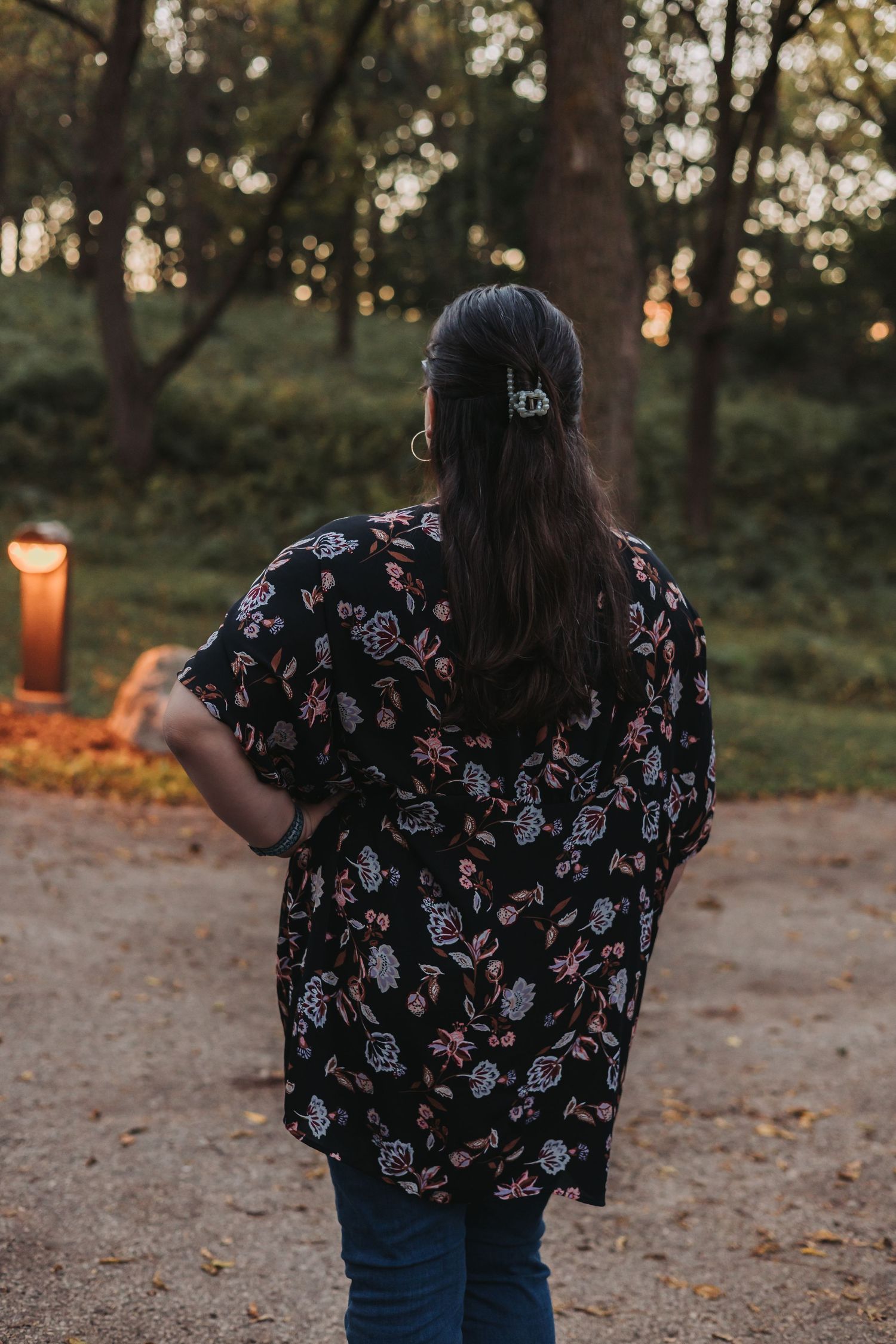
I hope when you look at these photographs years from now, you don't first see the woman who survived domestic violence.
I hope you see Lo.
The mama.
The woman of faith.
The student.
The homeowner.
The sister.
The friend.
The woman with a future she's excited to meet.
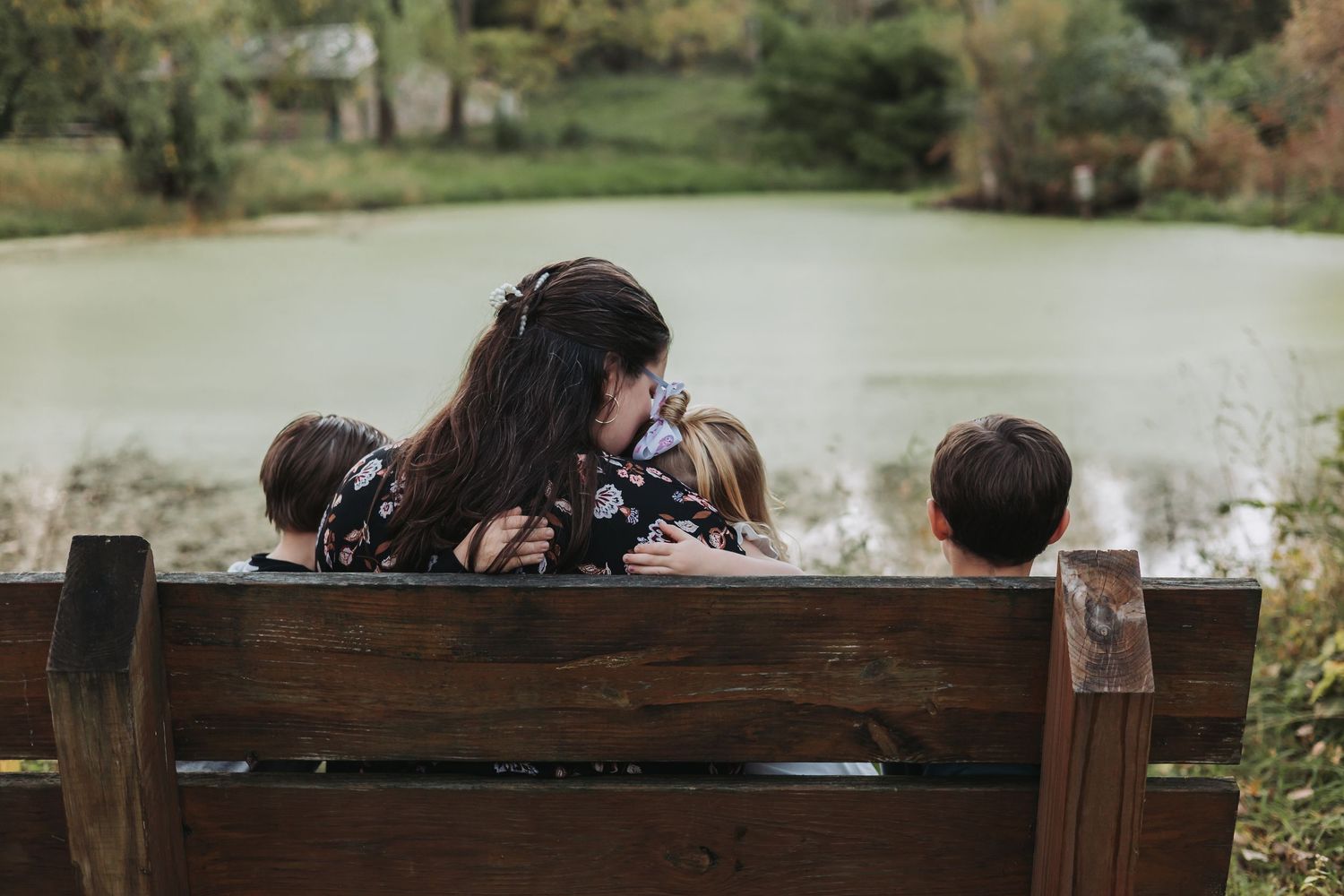
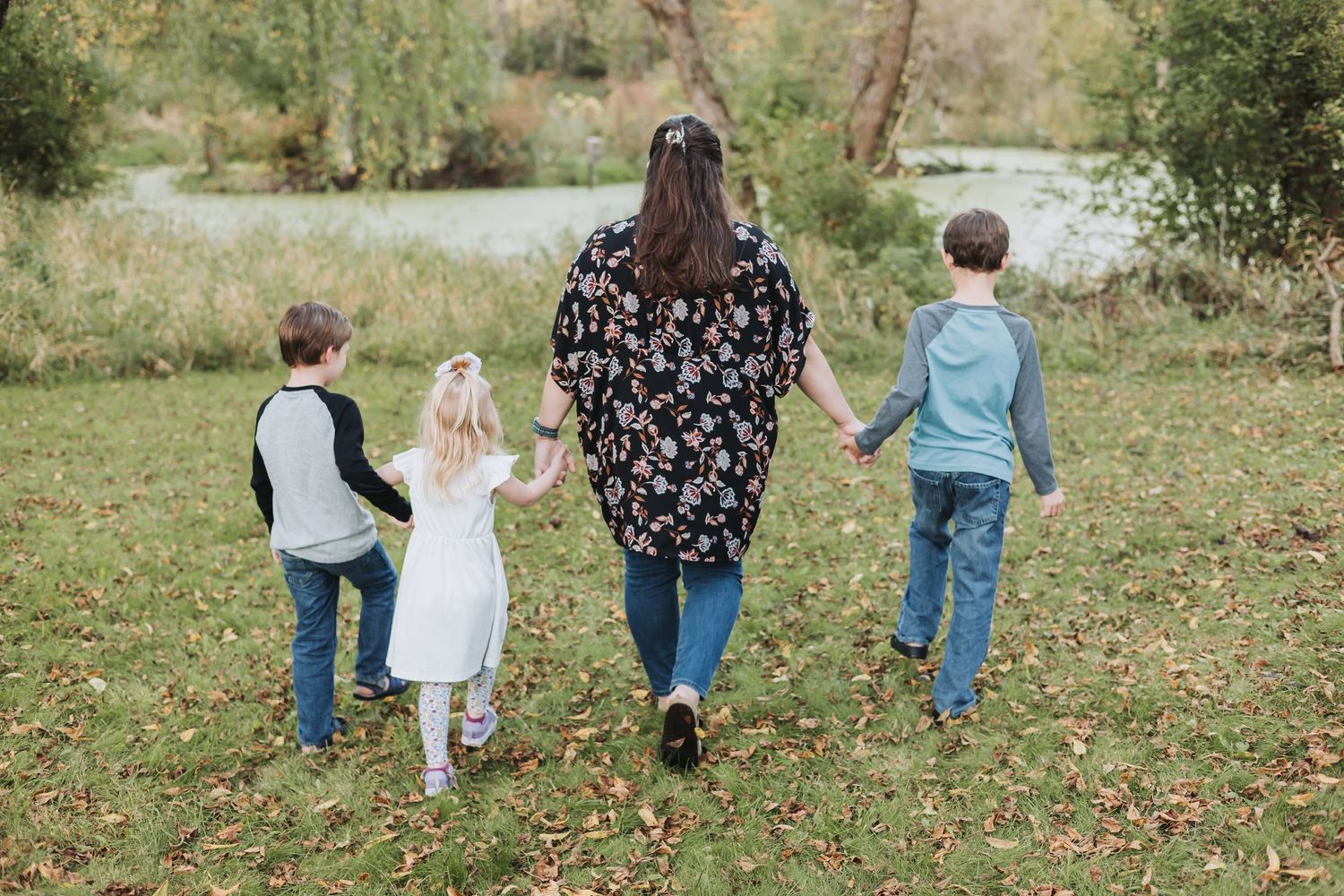
And I hope your babies someday look at that photograph of the four of you walking together and understand exactly what their mama did.
You walked them toward safety.
You walked them toward peace.
You walked them toward a beautiful new season.
And you kept going.
This is the peace you fought for.
Xo, Tierney