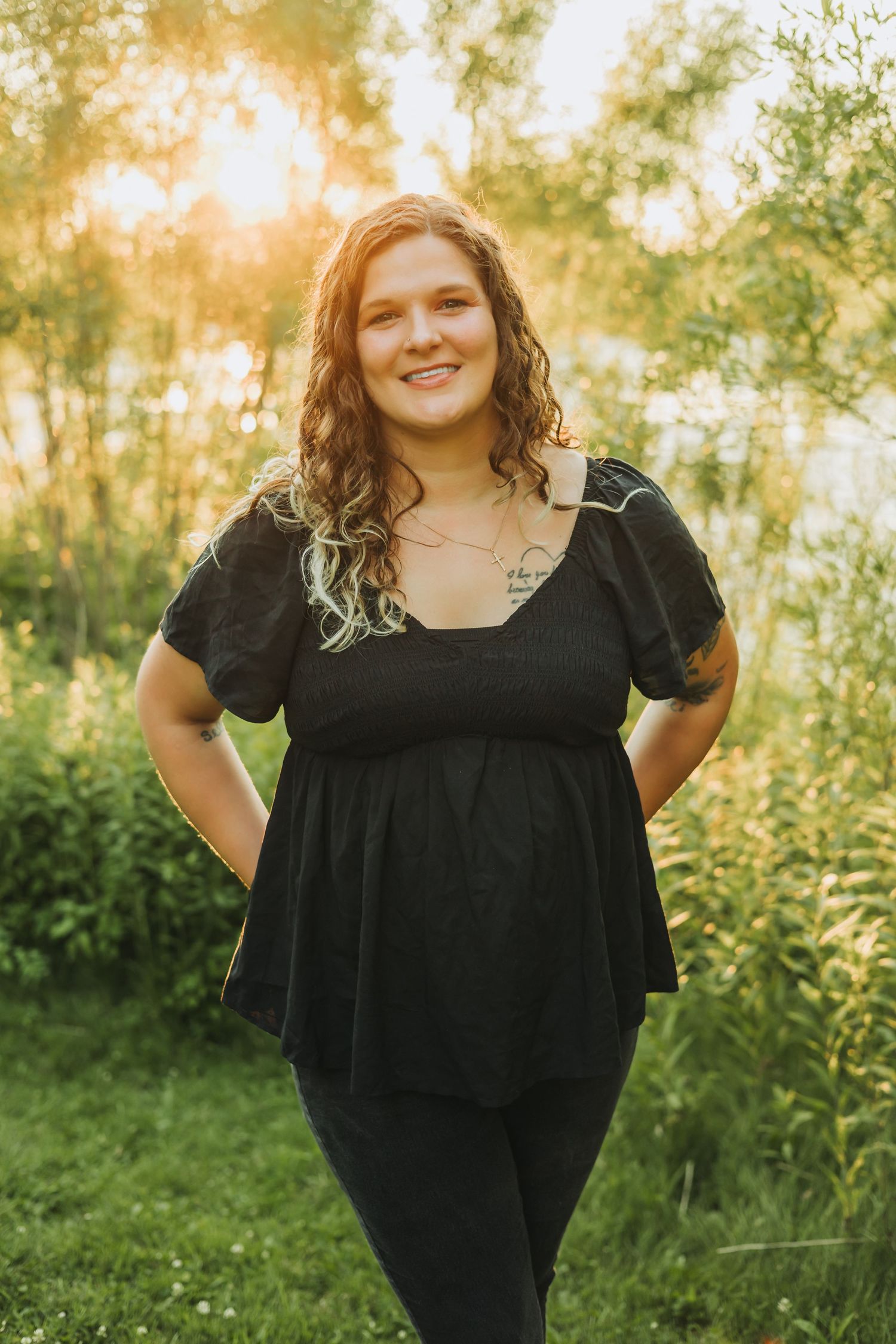
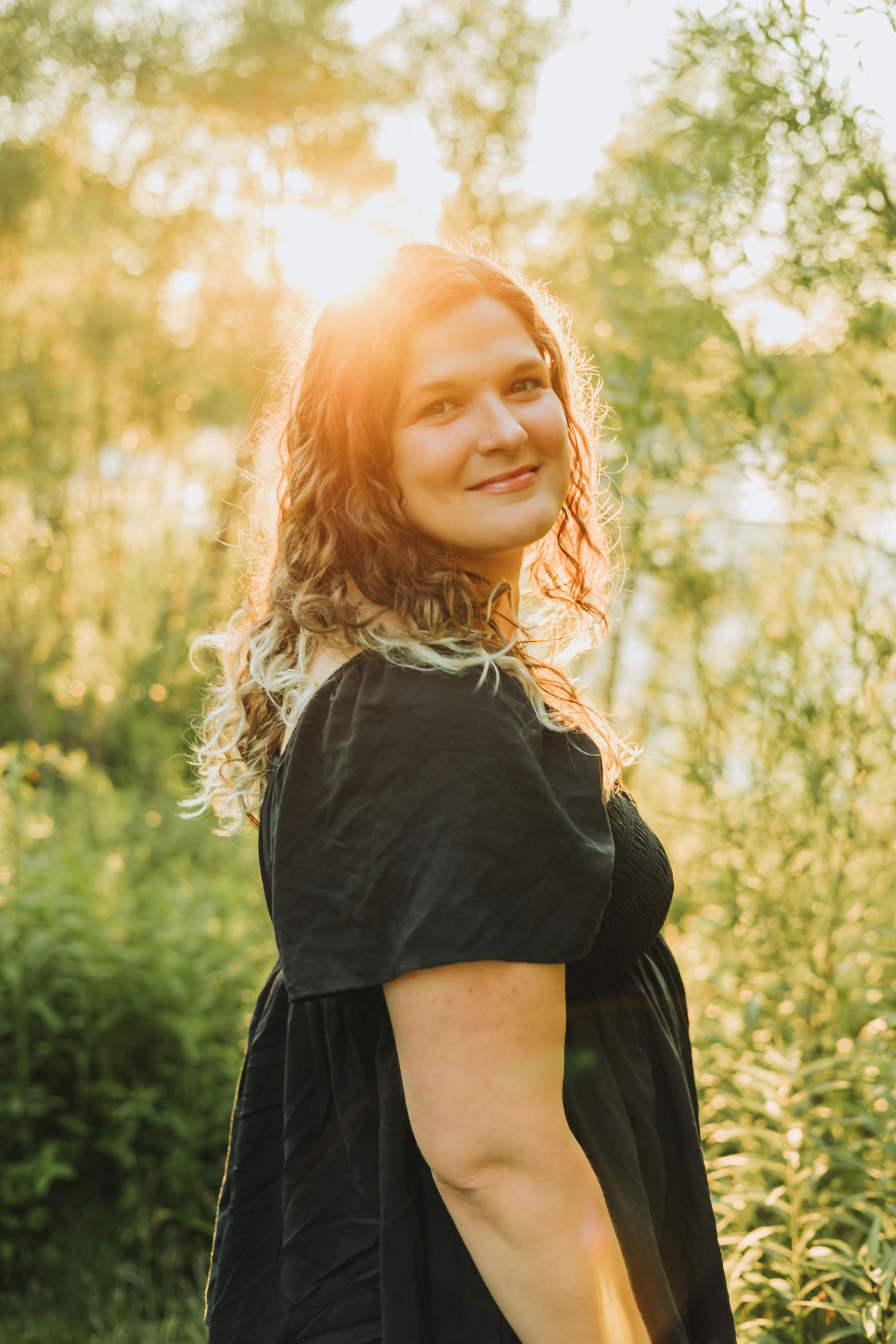
the rainbow after the storm: amber's story
When Amber describes her sobriety journey, she does it in just four words:
"Rainbow after the storm."
At 32 years old, Amber's story carries chapters that many people would struggle to imagine. She has lived through addiction to heroin, fentanyl, and cocaine. She has lost nearly everything. She has experienced the loss of herself and separation from her two oldest children. She is a survivor of human trafficking. She is a felon.
And she is also a mother of three. A team lead. A Certified Peer Support Specialist. A CNA. A student at the University of Wisconsin-Milwaukee working toward her bachelor's degree in social work. A woman who now walks beside vulnerable people in some of their lowest moments.
Amber is not one piece of her story.
She is all of it.
For Amber, the turning point did not arrive neatly.
"I lost everything and myself and it still wasn't enough, including my two oldest kids," she shared.
Addiction had already taken so much. But after experiencing human trafficking and eventually escaping, something began to shift. Amber describes the abuse she endured, along with the support she received from her mom while escaping, as part of what finally pushed her to fight harder for herself than she ever had before.
It was not simply about leaving one life behind.
It was about building an entirely new one.
Amber survived circumstances that could have killed her. She shared that at one point, her fentanyl levels were measured at 13 times the lethal dose.
And still, she is here.
When asked what a second chance means to her, Amber's answer carries the gravity of someone who understands exactly how close she came to never having one.
"Realizing there's something more. That I should be dead. My fentanyl levels were 13x the lethal dose, and I'm still here—and I'll never take it for granted."
Sobriety did not erase the past.
For Amber, one of the hardest parts of recovery has been carrying shame and guilt while also facing the judgment of others.
"Being treated like I am some horrible person or mother because I had struggled before," she said.
There is a particular cruelty in reducing a person to the worst period of their life. Addiction is often treated as a moral failure rather than a complex, treatable disease. People in recovery can do the exhausting work of rebuilding their lives and still find themselves permanently sentenced in the mind of others.
Amber knows that feeling.
She also knows she is more than it.
When asked what she is most proud of since beginning her sobriety journey, her answer was simple:
"Relearning myself."
Not returning to who she was before.
Relearning who she is now.
Amber credits her children, healthy boundaries, and learning how to cope as some of the strongest forces in her recovery.
Today, she is a mother of three. She has built a home and a family. She has endured long, sleepless nights while putting the pieces of her life back together.
When she looks at herself now, that is what she sees.
"My family, home I built, long sleepless nights to build myself back to me."
Sobriety has changed the way Amber experiences life itself.
"I enjoy life," she said. "I soak in everything I once lost."
There is something powerful in that sentence—not because every day must now be perfect, but because Amber knows what it means to lose pieces of life that many people take for granted.
Now, she notices them.
She holds onto them.
She lets herself live them.
Amber does not keep recovery to herself.
Today, she works as a Team Lead Certified Peer Support Specialist with Wisconsin Community Services, walking alongside vulnerable people struggling with addiction during some of their lowest moments. She is also pursuing her bachelor's degree in social work at UWM, with hopes of continuing to grow within the work she already does.
Her past is not something she simply escaped.
It became part of how she reaches back.
"Now I walk alongside other addicts and see the person in them they really are, until they can see it."
That sentence says so much about Amber's understanding of recovery.
She knows what it feels like to be judged.
She knows what it feels like to lose herself.
She knows what it feels like when the world sees a label before it sees a human being.
And now, she chooses to see the person.
Every time.
Amber wishes more people understood that addiction is a disease of the brain—and that it is treatable.
"The best thing you can do with your recovery once that's achieved is go back in the fire and give it away to someone else who needs it."
That is exactly what she is doing.
Amber wanted to be part of The Second Chance Project because she believes in the power of telling the whole story.
"I love to share my story and show addicts are more than just that. We can do things with our lives."
Her life is proof of that complexity.
Mother.
Survivor.
Felon.
Student.
CNA.
Peer support specialist.
Team lead.
Future social worker.
A woman who lost herself and fought through long, sleepless nights to find her way back.
A woman who survived.
A woman who now helps others survive, too.
If someone currently living through addiction were reading Amber's story, there is something she would want them to hear.
"If nobody has ever told you, I'm so proud of you. And it gets better—better than you'll ever imagine."
Maybe that is what the rainbow after the storm really means.
Not that the storm never happened.
Not that it left no damage behind.
Not that survival magically erased grief, guilt, consequences, or pain.
But that Amber is still here to see what came after.
And she refuses to take it for granted.
__________________________________________________
reflections from the photographer
There are some applications I read that make me sit with my phone in my hand for a minute after I finish.
Amber's was one of them.
What stayed with me most was not only everything she has survived. It was the way she talks about other people who are still struggling.
She wrote that she now walks alongside other addicts and sees the person they really are until they can see it themselves.
I keep coming back to that.
Because that is so much of what I believe The Second Chance Project is supposed to be.
Addiction can take so much from a person. And stigma can keep taking long after recovery begins. People remember the arrest. The relapse. The substances. The mistakes. The worst day. The worst version. The label.
Amber asks us to look longer.
She is a mother of three. She is a survivor of human trafficking. She is a felon. She is a CNA. She is Certified Peer Support Specialist and team lead. She is a college student working toward a bachelor's degree in social work. She is building a career around standing beside vulnerable people at their lowest moments.
She is not asking anyone to pretend her past did not happen.
She is showing us that her past is not the only true thing about her.
That matters deeply to me.
My own reason for creating this project comes from losing my dad to addiction when I was ten years old. I know what addiction can take from a family. I also know that behind every label is a human being—someone's parent, child, sibling, friend. Someone with a story that did not begin with addiction and does not have to end there.
Amber survived.
Then she rebuilt.
And now she reaches back into places she knows intimately to help someone else find their way out.
I cannot think of a more powerful example of a second chance than that.
Xo, Tierney